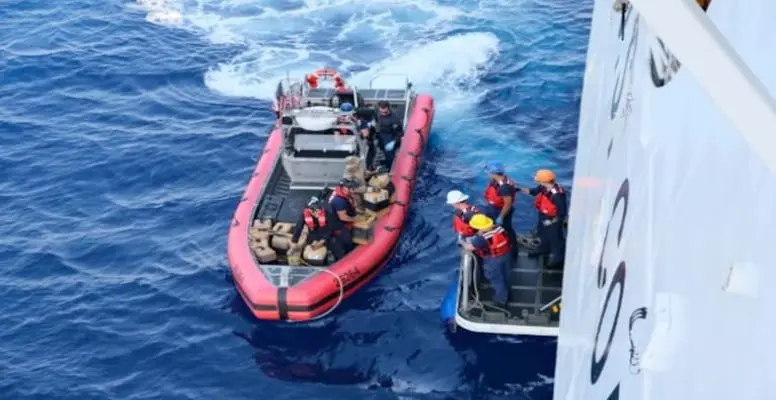
Write a general description of the body of water(s) where you acquired your sea days.
Some examples of bodies of water are Pacific Ocean, Columbia River, Puget Sound, Gulf of Mexico, Atlantic Ocean, and Buzzard's Bay.

How is this used?
The Coast Guard uses the description as part of the process to determine whether sea days are credited as Near Coastal, Great Lakes, or Inland. All descriptions of waters that do not qualify as Great Lakes or near coastal are considered “inland” for the purposes of evaluation.
What if I leave it blank?
With no information to determine where the sea days took place, the Coast Guard will likely consider all of the days as Inland.

We hope this made your life a little easier and if you have other questions the MM-SEAS team is always here to help!
MM-SEAS is free to use on your own and if you need some more personalized help you can upgrade to MM-SEAS Expert Access inside of the site.
No matter what, when you are ready to submit your application you can do it yourself, or you can hand the whole thing to us. An MM-SEAS Navita Navigator walks you through submitting in Navita, the Coast Guard's new submission portal, on a short video call. No computer, or not up for a video call? Our team gets your application submitted to the Coast Guard for you anyway. A Stress-Free MMC is $399. Two MM-SEAS licensing experts check every page, we pay your Coast Guard fees at submission and charge your card so you never touch pay.gov, and we stay on it with the National Maritime Center until your credential is issued.
MM-SEAS Expert Access is $99 a year. It is your personal guidance counselor for USCG licensing: what training you need next, which sea time counts, and how to reach the credential you want, by phone, email, chat or a 1 on 1 video call. Expert Access members also get $50 off a Stress-Free MMC.
Need to renew, upgrade or get your first USCG license? We're here to help.
About the author

Nate Gilman is President and Co-Founder of MM-SEAS. He hawsepiped from the deck to a 3rd Mate Unlimited license with full STCW compliance over more than 15 years at sea, and is a veteran of the NOAA Commissioned Corps. He works directly with the National Maritime Center, USCG-approved training schools, and vessel operators on credentialing policy, and writes on sea service documentation, evaluation standards, and how mariners move up the license ladder.